


Keeping Medications Cold on a Cruise: 12 Tips for Traveling with Temperature-Sensitive Medications

If you travel with insulin, injectable medications, or another prescription that needs to stay within a certain temperature range, figuring out how to safely store it on a cruise can add an extra layer of planning.
Can you use the refrigerator in your cruise cabin? Should you bring ice packs? What happens on embarkation day or during a shore excursion? And should your medications go in your checked luggage or stay with you?
The good news is that a little preparation before your trip can make managing medications at sea much easier. The most important thing to remember is this: don't assume your cruise cabin refrigerator or minibar is suitable for a medication that has specific temperature requirements. Equipment and policies vary by cruise line and ship.
Before sailing, check the storage instructions for your specific medication and contact your cruise line to find out what refrigeration or medical-storage options are available.
1. Contact Your Cruise Line Before You Sail
If your medication requires refrigeration or other special storage, contact your cruise line before your trip.
Ask about:
Medical refrigeration options
Whether your cabin has refrigeration appropriate for medication
Storage through the onboard medical center
Availability of medical coolers
Sharps containers if you use injectable medications
Whether there is a way to refreeze reusable gel packs, if needed
Any rules regarding personal medication coolers or powered cooling devices
Don't assume that the small refrigerator or minibar in your cabin will maintain the temperature your medication requires. For example, Carnival specifically states that its stateroom mini-bars are designed to maintain beverage temperatures and should not be used for medications with specific temperature requirements. Carnival offers a limited number of medi-coolers and says its Medical Center can assist with refrigeration when one isn't available. Other cruise lines and ships may have different policies, so check directly with your cruise line before sailing.
2. Know the Storage Requirements for YOUR Medication
Not every medication has the same storage requirements. Some medications require refrigeration. Others can remain at room temperature for a certain period after they're opened. Some can be damaged by excessive heat, while others can be damaged by freezing.
Before traveling, check the medication label and manufacturer's storage instructions.
If you're unsure, ask your pharmacist or healthcare provider:
What temperature range does my medication require?
How long can it safely remain unrefrigerated?
What temperatures are considered too hot?
Can freezing damage it?
Can it be refrigerated again after reaching room temperature?
What should I do if I think it became too hot or too cold?
Colder isn't necessarily better. Don't automatically surround medication with ice or frozen gel packs. Follow the storage instructions for your particular medication and the directions for any medication cooler or cooling pouch you're using.
3. Keep Your Medications WITH YOU
This is one of the most important travel tips in this entire article: Keep essential medications and medical supplies in your carry-on or personal bag — not in your checked luggage. This applies when flying to your cruise and when boarding the ship.
Checked luggage can be lost, delayed, damaged, or misplaced. On embarkation day, the larger bags you give to porters may also take several hours to reach your cabin. You don't want your next dose of medication — or the supplies needed to keep it at the proper temperature — sitting inside a suitcase you can't access.
Temperature is another consideration. Checked bags can spend time in environments where you have little control over heat or cold. I like to think of it this way: If it's medically important, keep it with you.
4. Keep Medications in Their Original Labeled Containers
When traveling internationally, keeping medications in their original, labeled containers is especially important. The CDC recommends that international travelers keep medications in their original labeled containers rather than transferring them into pill organizers for travel.
Original packaging also makes it much easier to identify:
Your name
The medication
The dosage
The prescribing information
The pharmacy information
If you normally use a pill organizer at home, consider waiting until you reach your destination before organizing your medications. It's also a good idea to carry copies of your prescriptions and, depending on your medications, documentation from your healthcare provider.
5. Check the Medication Rules for Your Destinations
Cruising adds another consideration: you're potentially visiting several different countries on one vacation. A medication that's perfectly legal at home may be restricted or prohibited somewhere else. This can be especially important with certain controlled substances and other regulated medications.
Before an international cruise, check the medication rules for the countries on your itinerary — and don't forget about countries where you may pass through customs while traveling to or from your cruise. If you're uncertain about a particular prescription, ask your healthcare provider or pharmacist what documentation you should carry and check official government information for your destinations.
6. Traveling With Injectable Medications? Bring Documentation
If you travel with insulin or another medication that requires regular injections, consider carrying documentation explaining why you have needles, syringes, or other medical equipment. The CDC recommends that travelers requiring regular injections bring a healthcare professional's letter explaining the need for the equipment.
It's also worth asking your cruise line about sharps disposal before sailing. Many ships can provide an appropriate sharps container. Keep your medication and necessary injection supplies together in your carry-on so they're readily accessible.
7. Don't Forget About the Weather
It's easy to focus on what happens once you're inside your cabin and forget about everything your medication encounters before and after it reaches the ship. Think about your entire travel day.
Your medications could be exposed to temperature extremes while you're:
Traveling to the airport
Flying to your embarkation city
Riding in a car or shuttle
Waiting outside the cruise terminal
Boarding the ship
Walking around a port
Sitting on a beach
Taking a long shore excursion
Riding in an excursion vehicle
A medication bag left in direct sunlight or inside a hot vehicle can heat up quickly. Cold weather can also matter because some medications can be damaged by freezing. The CDC notes that extreme temperatures can reduce the effectiveness of many medications, which is another reason to know the storage requirements for your particular prescriptions before you leave home.
8. Consider an Insulated Medication Travel Bag
A dedicated insulated medication bag can be useful for keeping medications and supplies together while traveling.
Depending on the requirements of your medication, an insulated bag may be helpful during:
Flights
Airport transfers
Embarkation
Days onboard
Shore excursions
The trip home
It also gives your medication a dedicated place instead of having it mixed in with snacks, drinks, toiletries, and everything else in your carry-on. Remember, though, that an insulated bag alone doesn't guarantee a particular temperature. Choose a cooling system appropriate for your medication's specific storage requirements.
9. Using Gel Packs? Use Them With Care
Reusable gel packs can be helpful for certain temperature-sensitive medications, but they need to be used appropriately. Some medications can be damaged if they freeze.
Instead of following a one-size-fits-all method, follow:
Your medication's storage instructions
Your pharmacist or healthcare provider's recommendations
The instructions provided with your medication cooler or cooling pouch
If you're flying to your cruise, TSA allows medically necessary gel/freezer packs in reasonable quantities, including when they're partially melted or slushy. They are subject to screening, so allow a little extra time at security.
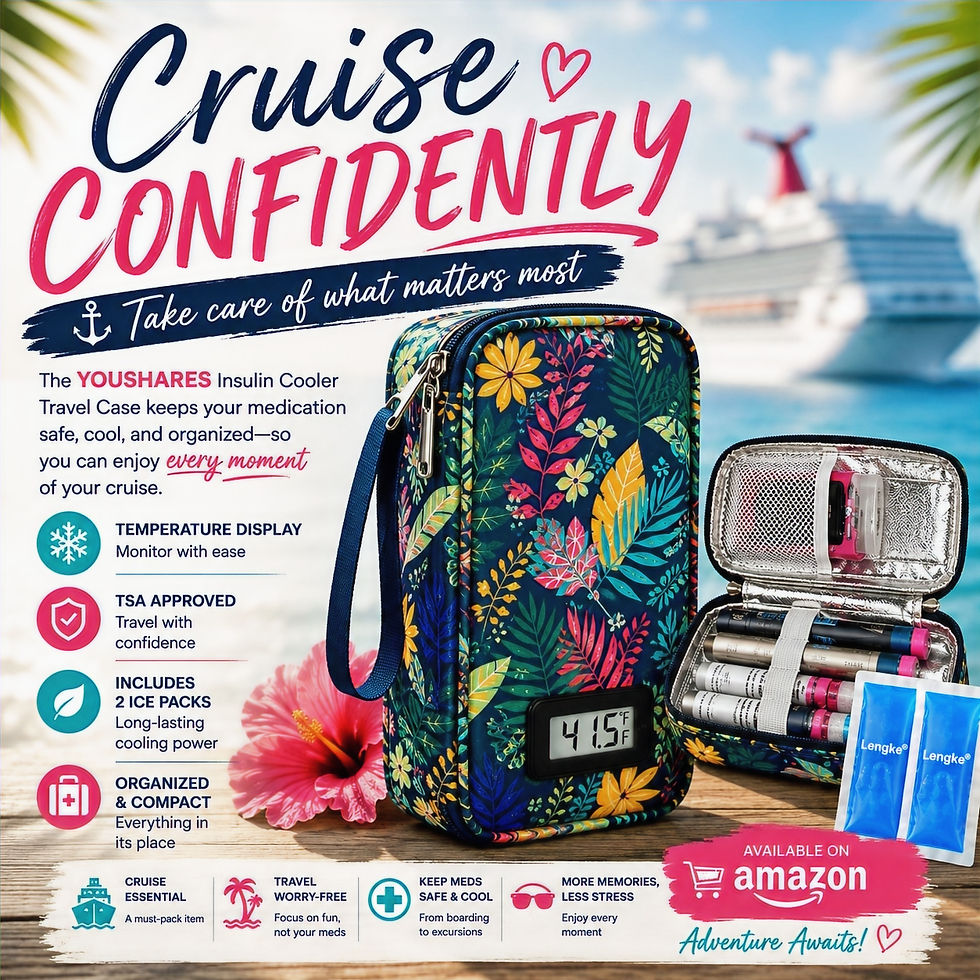
10. Consider a Medication Travel Cooler
If you're carrying several temperature-sensitive medications or need more cooling capacity, a dedicated medication travel cooler may be useful. There are insulated and powered options available.
Before relying on a powered cooler, check:
The temperatures it's designed to maintain
How it's powered
How long it can operate without power
Whether it's appropriate for your medication
Your cruise line's rules regarding the device
How you'll keep medication safe if the device stops working
Always have a backup plan. If a medication must remain within a particular temperature range, you don't want its safety depending entirely on one electronic device.
11. Plan for Shore Excursions
Your medication needs don't stop when you walk off the ship. If you'll be spending several hours sightseeing, sitting on a beach, riding in a tour vehicle, or exploring a warm-weather destination, think about how you'll protect your medications while you're away.
Consider:
How long you'll be off the ship
Expected outdoor temperatures
Direct sunlight
Time spent in vehicles
Whether you'll have access to air conditioning
How long your cooling method is designed to work
A four-hour excursion and a ten-hour excursion can require very different plans. Keep your medication with you rather than leaving it unattended on a tour bus, and protect it from direct sunlight and temperature extremes.
12. Consider Monitoring the Temperature
If your medication needs to remain within a specific temperature range, a small thermometer or temperature-monitoring device can give you additional information about its storage environment. Something that feels cold isn't necessarily maintaining the temperature required for your medication. Likewise, an insulated bag that's still cool to the touch doesn't necessarily tell you the actual temperature inside.
Follow the manufacturer's storage instructions for your medication and ask your pharmacist or healthcare provider what type of temperature monitoring, if any, is appropriate.
What About the Refrigerator in Your Cruise Cabin?
This is one area where you shouldn't make assumptions. Some cruise cabins have refrigerators or mini-bars intended primarily for beverages. That does not necessarily mean they maintain the temperature required for a particular medication.
Instead of trying to make a cabin refrigerator colder or modifying the cabinet around it, contact your cruise line and find out what options are available for guests who require medication refrigeration. If the cabin refrigerator isn't appropriate, Guest Services or the onboard medical center may be able to direct you to another option.
Have a Backup Plan
Travel rarely goes exactly according to plan. Your cabin may not be ready when you board. A cooler could stop working. A gel pack could thaw. An excursion could last longer than expected. Your flight home could be delayed. That's why I recommend having a backup plan before you leave home.
Depending on your medication and its storage requirements, your backup plan might include:
An insulated medication pouch or cooler
Appropriate reusable cooling packs
A waterproof medication pouch
A temperature-monitoring device
Backup power for an approved powered cooler
Extra medication in case of travel delays
Knowing how to contact Guest Services or the onboard medical center
Ice may be available onboard, but don't assume that an ice bucket or loose ice will maintain your medication at its required temperature. And never use dry ice or another extreme cooling method unless it's specifically appropriate for your medication and travel setup.
Medication & Vitamin Travel Essentials
I keep a list of helpful medication and vitamin travel items, including organizers, insulated bags, cooling products, and other travel essentials.
Quick Medication Checklist Before Your Cruise
Before leaving home:
Keep essential medications and medical supplies in your carry-on or personal bag.
Keep medications in their original labeled containers for international travel.
Bring enough medication for your entire trip plus extra in case you're delayed.
Know the storage requirements for each medication.
Check the medication rules for the countries on your itinerary.
Bring appropriate documentation for injectable or restricted medications when needed.
Protect medications from excessive heat, direct sunlight, and freezing temperatures.
Don't assume the cabin refrigerator is appropriate for medication storage.
Contact your cruise line ahead of time if you require refrigeration or other accommodations.
Follow the instructions for your specific medication when using gel packs or cooling devices.
Plan how you'll protect medications during shore excursions.
Have a backup plan in case your primary cooling method isn't available.
Keeping medications safe on a cruise is absolutely manageable — but the right solution isn't the same for everyone. Don't base your medication-storage plan solely on what another traveler uses. A cooling method that's appropriate for one medication could be completely inappropriate for another.
Before you travel, check the manufacturer's storage instructions for your medication, talk with your pharmacist or healthcare provider if you have questions, and confirm available accommodations with your cruise line. Then you can board knowing you have a plan for embarkation day, your time onboard, your shore excursions, and the journey home.
Do you travel with medications that require special storage? What cruise-travel tips have worked well for you? Share them in the comments!





Comments